Lions Park Cooma Planting and Regeneration Plots
On September 11th and 12th 2026, USLN in Partnership with Cooma Landcare delivered a community planting day at the Cooma North Lions Park.
After successfully receiving funding from the Club Grants program, delivered locally by the Cooma Ex-Services Club, we were able to collaborate with Snowy Monaro Regional Council and the Lions Club to design and deliver this project.
The aim of the project overall has been to improve the visual amenity of the park while planting, and regenerating, suitable species to support local biodiversity. The park is heavily infested with exotic weeds, impacting both the ecology and visual amenity of this green space. There are three distinct sections of the project.
Planting Plots
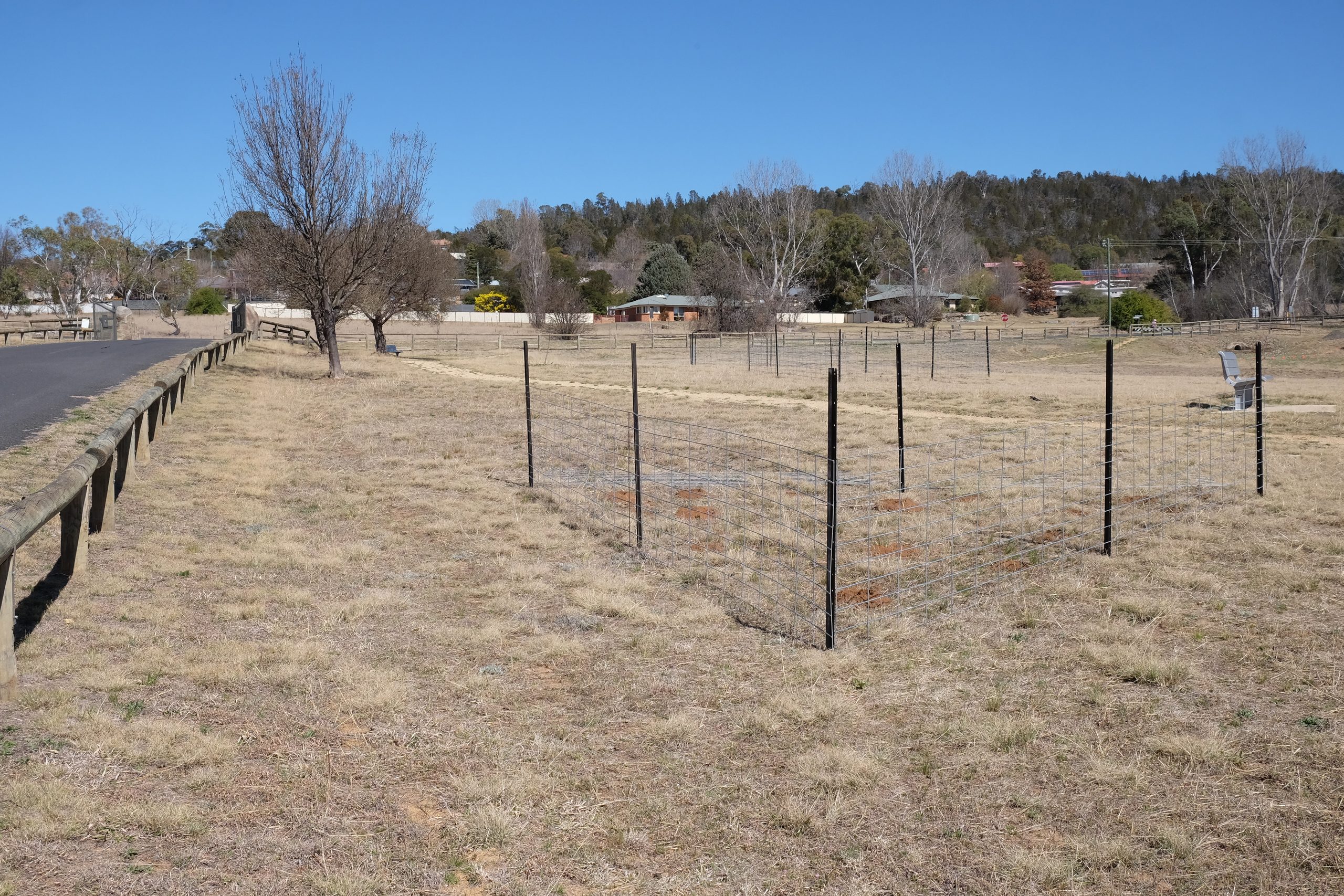
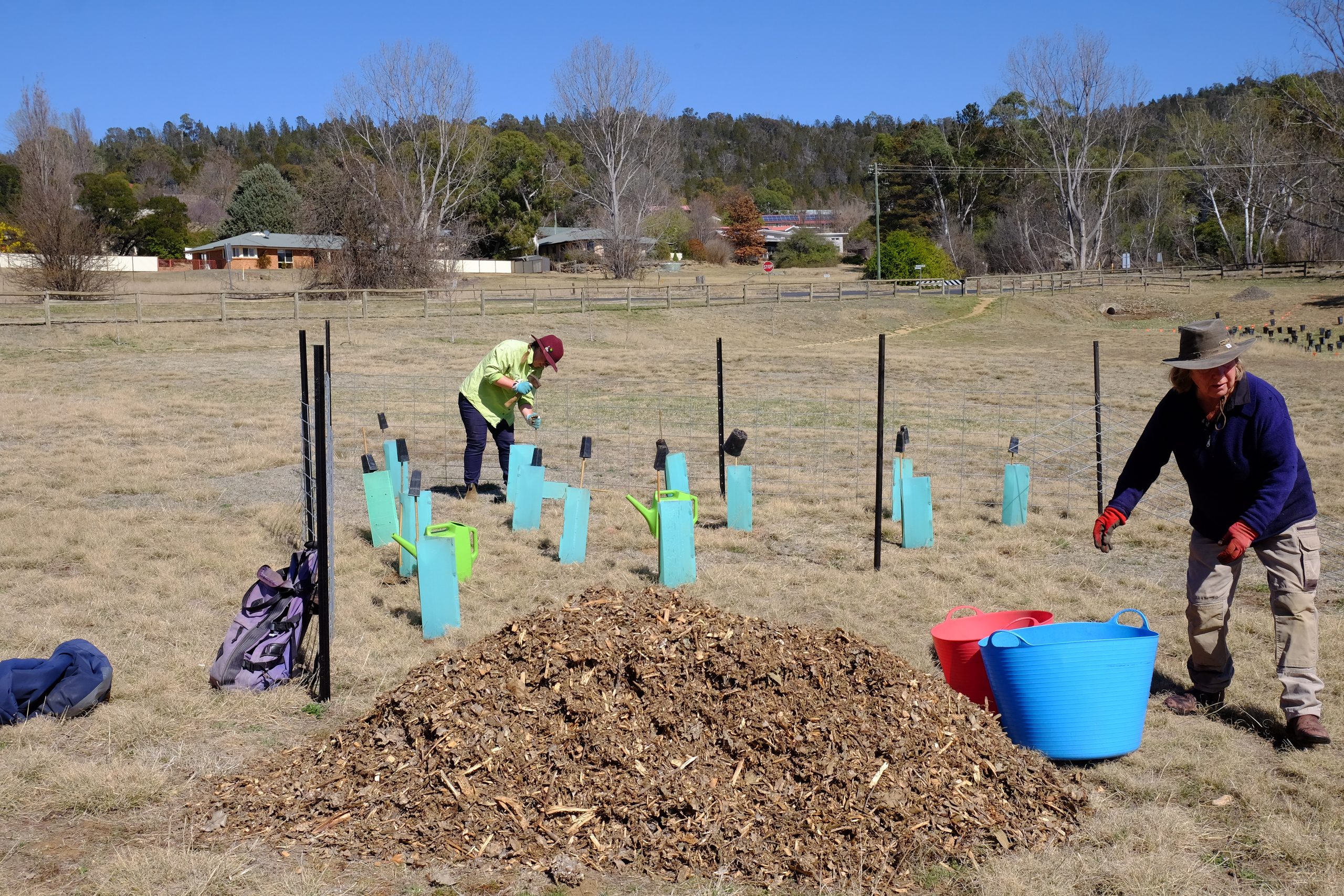
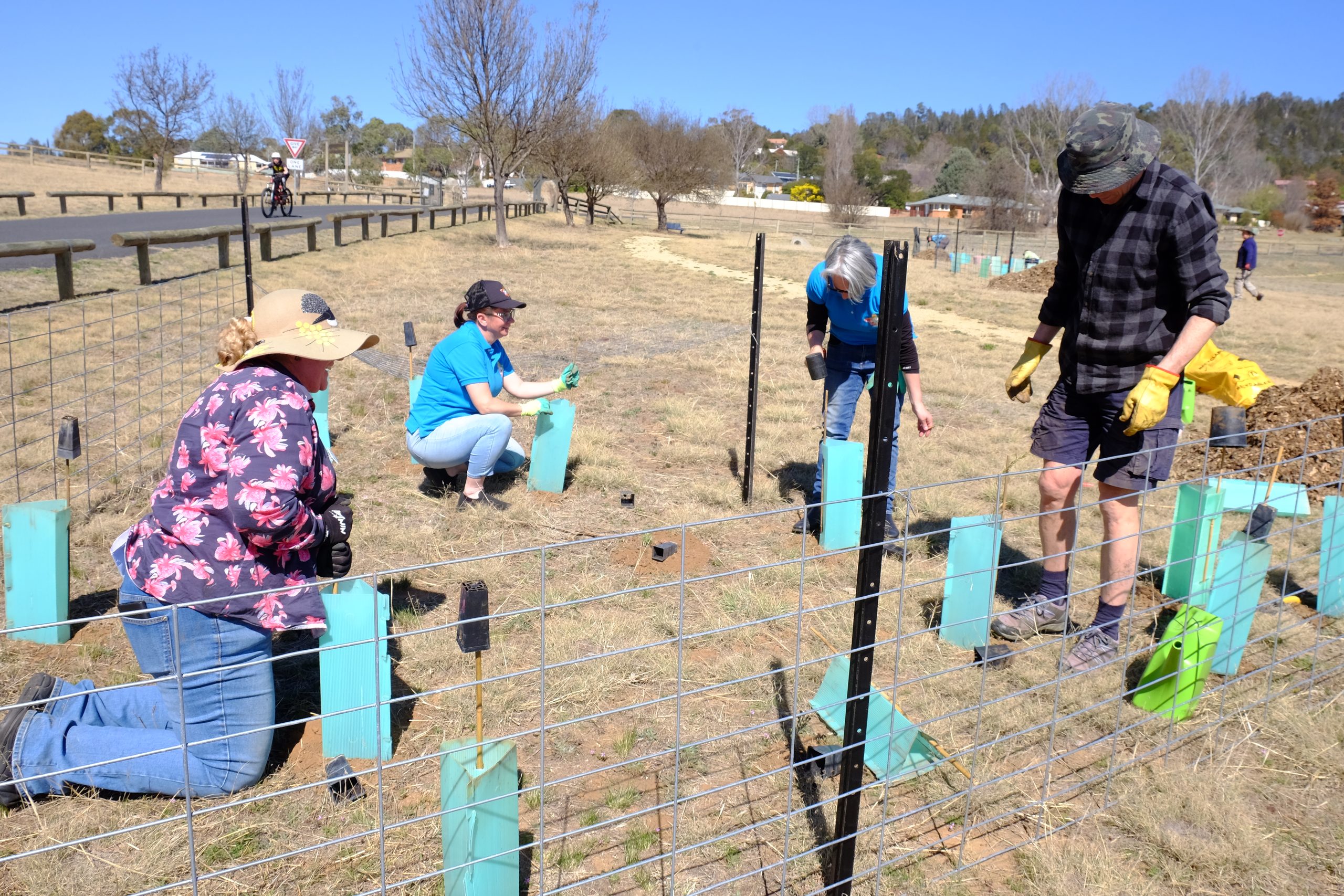
Three triangular, fenced plots have been established in the park, and were planted into, using a range of native flowering shrubs and forbs. Volunteers worked to dig holes, fence the site, plant, water and guard the new plants. These species have all been selected with the aim of supporting local bird and pollinator populations and replacing areas infested with African lovegrass. These plots will offer wonderful seasonal colour to park users and are made up of the following species:
- Callistemon pityoides – Alpine Bottlebrush
- Correa reflexa – Native Fuchsia
- Acacia boormanii – Snowy River Wattle
- Grevillea australis – Alpine Grevillea
- Grevillea diminuta – Small Grevillea
- Hakea microcarpa – Small-fruited Hakea
- Kunzea parvifolia – Violet Kunzea
- Leptospermum myrtifolium – Myrtle Tea-tree
- Bulbine bulbosa – Bulbine Lily
- Chrysocephalum apiculatum – Common Everlasting
- Chrysocephalum semipapposum – Clustered Everlasting
- Correa alba – White Correa
- Pimelea linifolia – Slender Rice-Flower
- Arthropodium strictum – Chocolate Lily
- Dianella longifolia – Flax Lily
- Wahlenbergia stricta – Tall Bluebell
Storm Gully
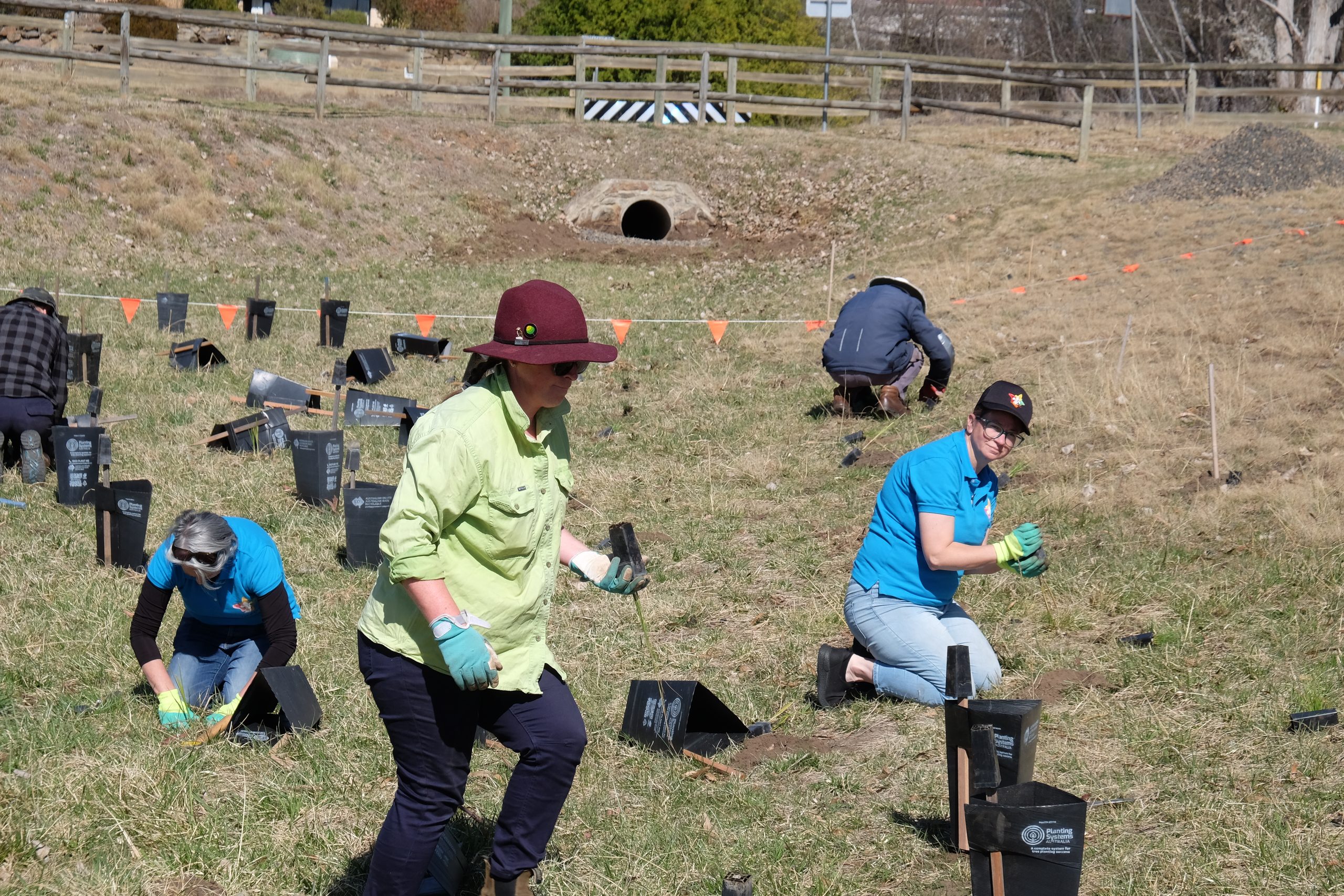
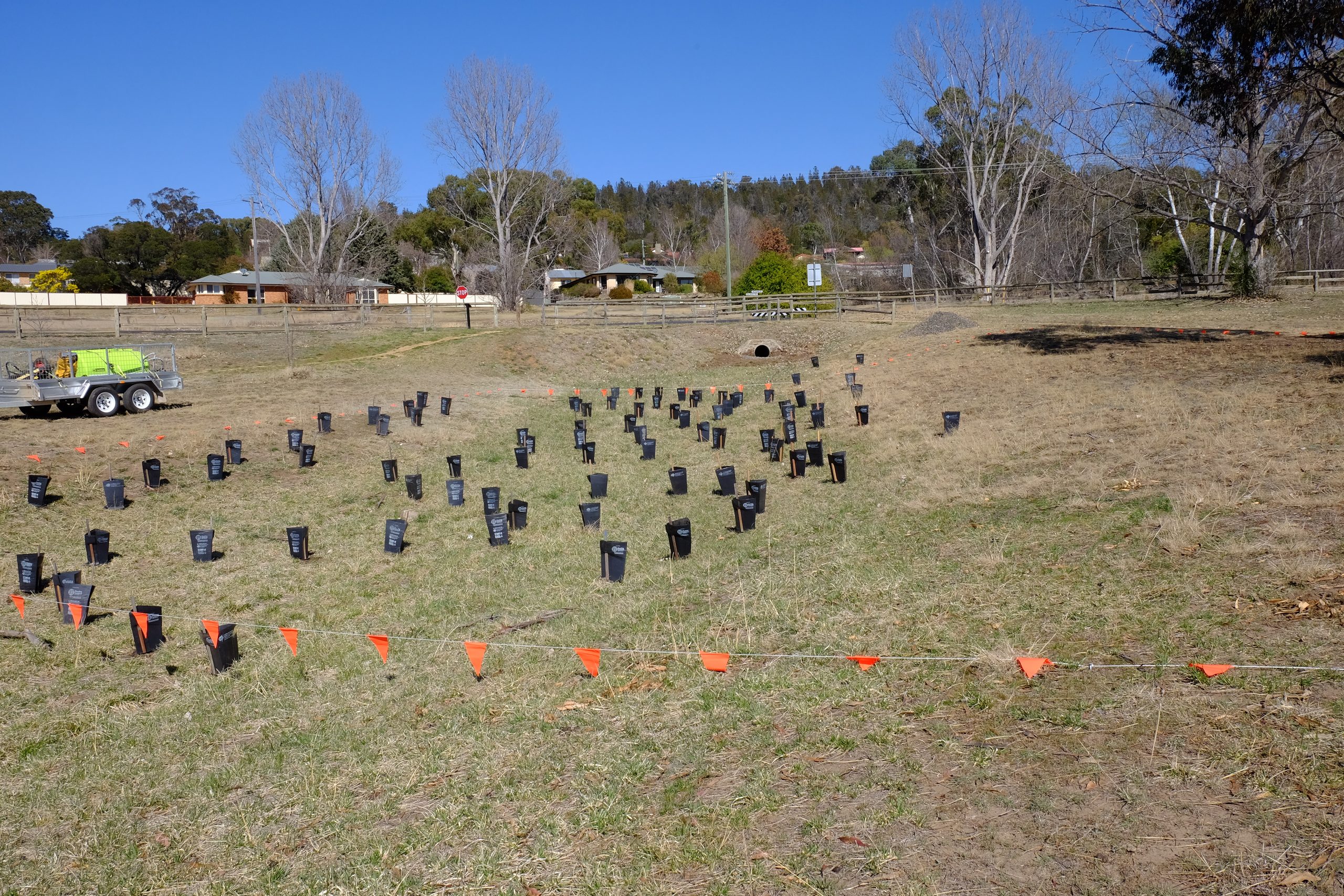
The park has a variety of areas, so to further boost support for local biodiversity, volunteers have dug, planted, watered and guarded a section of the storm water gully with a variety of wetland plants. We hope to provide habitat for local frogs and reptiles as well as mitigating erosion and slowing storm water as it flows into the park. Selected plants include:
- Leptospermum myrtifolium – Myrtle Tea-tree
- Carex appressa – Tall Sedge
- Juncus usitatus – Common Rush
- Carex fascicularis – Tassel sedge
- Poa labillardieri – Poa Tussock
Regeneration Site
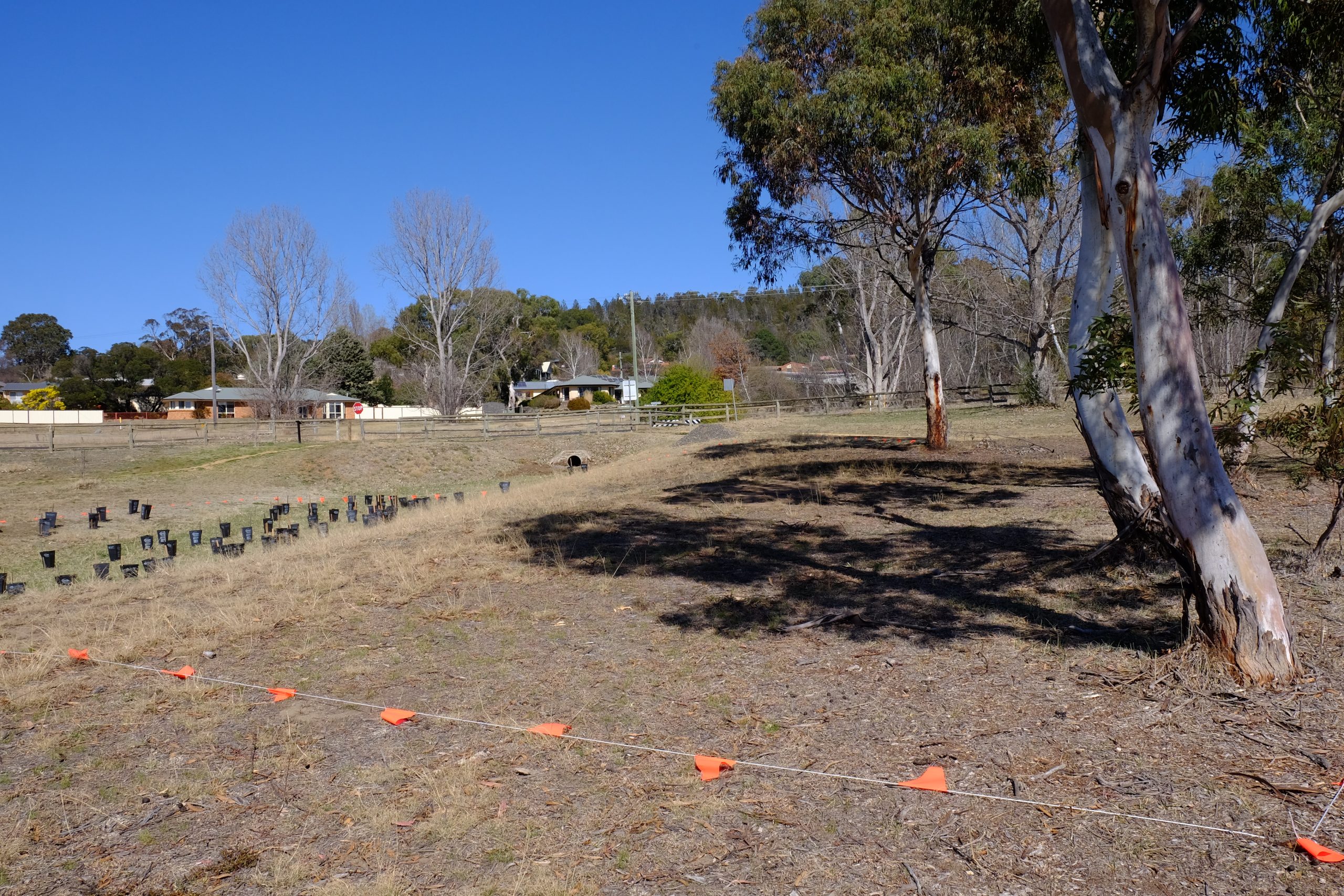
Depending on the condition of a site, the best option for ecological restoration is often assisted regeneration efforts. Next to the storm gully we have flagged off a regeneration site, containing remnant local bushland.
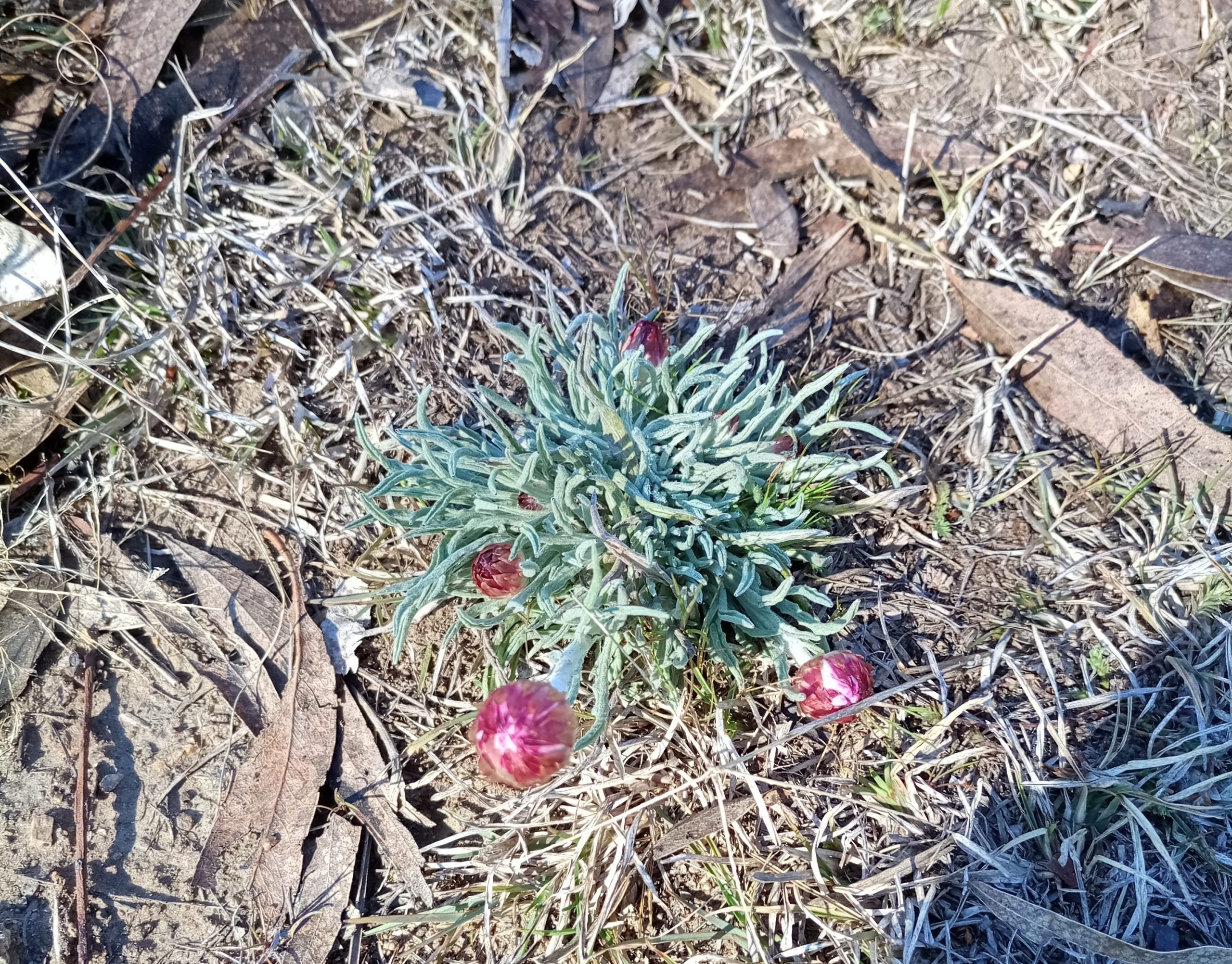
There are a number of important local species growing in this area, though they are hampered by exotic weed growth and slashing. Flagging off this no-mow regeneration area will mean volunteers can manage weeds, and allow local forbs to grow all the way to maturity, flowering and setting seed, providing food for pollinators and encouraging natural regeneration through seed set.
We hope to see an improvement in ground layer forb density and diversity as a result of this management.